
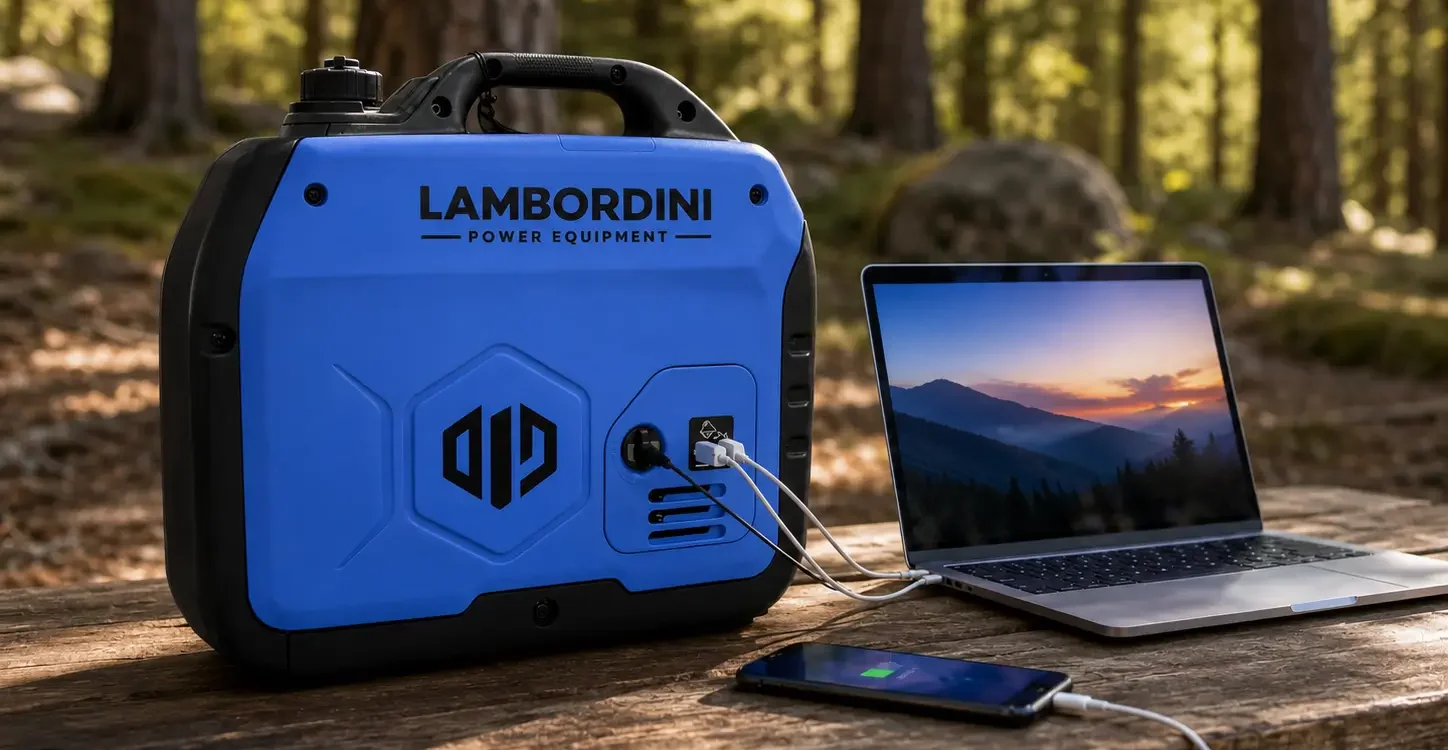
If you have been researching portable generators, you have likely come across the term “inverter generator” — and wondered how it differs from a conventional generator. The answer lies in how each type produces and delivers electricity, and the difference has significant practical implications for anyone powering sensitive electronic devices.
Here is a clear explanation of inverter technology, why it produces cleaner power, and when an inverter generator is the right choice.
How a Conventional Generator Works
A conventional generator produces AC electricity directly from the rotation of an alternator, driven by a combustion engine running at a fixed speed — typically 3000 rpm in 50 Hz markets or 3600 rpm in 60 Hz markets. The engine maintains this constant speed regardless of the load, which is why conventional generators are often noisier and less fuel-efficient under light loads.
The AC power produced is usable for most applications, but it contains a degree of harmonic distortion — minor fluctuations in the voltage waveform that can be problematic for sensitive electronics.
How an Inverter Generator Works
An inverter generator takes a fundamentally different approach. The process happens in three stages:
• Stage 1 — The engine generates raw AC electricity, as with a conventional generator.
• Stage 2 — The raw AC is converted to DC electricity by a rectifier.
• Stage 3 — The DC is inverted back to clean AC electricity by a microprocessor-controlled inverter circuit.
This three-stage process allows the inverter to produce a pure sine wave output with very low total harmonic distortion (THD) — typically less than 3 percent. This is comparable to the quality of power from a utility grid, and in some cases superior to it.
Because the engine speed can vary with the load — running slower under light loads and faster under heavy demand — inverter generators are also significantly more fuel-efficient and quieter than conventional equivalents of similar output.
Why Clean Power Matters for Electronics
Modern electronics — laptops, smartphones, medical devices, audio and video equipment, variable-speed motor drives, and LED lighting systems — contain sensitive microprocessors and components that respond to the quality of the power supply they receive.
Dirty power — electricity with high harmonic distortion — can cause:
• Overheating of transformers and motors
• Data corruption and unexpected shutdowns in computers
• Reduced lifespan in battery chargers and power supplies
• Interference in audio and video equipment
• Erratic behaviour in medical devices
A pure sine wave output from an inverter generator eliminates these risks, making it the safe choice for any application involving sensitive electronics.
Inverter vs Conventional — When to Choose Each
Inverter generator — choose when:
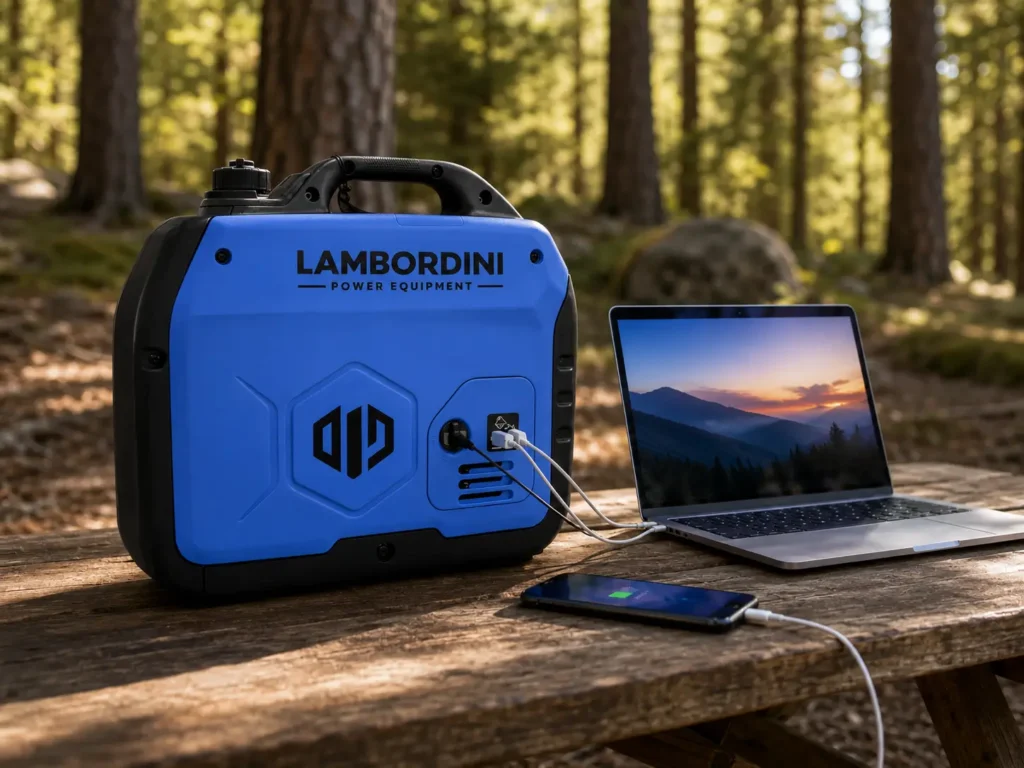
• You are powering laptops, phones, cameras, audio equipment, or medical devices.
• Quiet operation matters — campsites, residential use, outdoor events.
• Portability is a priority — inverter generators are typically more compact and lighter.
• Fuel efficiency under variable loads is important.
Conventional generator — choose when:
• You need high output for power tools, motors, or heavy equipment.
• The generator will run under continuous high load.
• Lower upfront cost is the priority.
• Power quality sensitivity is not a concern.
The Lambordini PT3500 — Portable Inverter Power, Italian Engineered
The Lambordini PT3500 is the flagship model of the Portable Inverter Gasoline Generator Series — a compact, sealed inverter generator powered by the LMB PT 360 OHV 4-stroke engine. With 3.5 kVA standby and 3.0 kVA prime output, it delivers clean sine wave power across voltages from 100V to 240V in both 50 Hz and 60 Hz configurations.
At 65 dB noise level at 7 metres and a compact sealed enclosure with integrated carry handle, the PT3500 is designed to go wherever power is needed — from outdoor events and remote worksites to residential backup and commercial applications — backed by the same Italian engineering standards that define every product in the Lambordini range.
Final Thought
If you are powering anything with a microchip or a battery — a laptop, a phone, a camera, or a medical device — an inverter generator is not a luxury. It is the right tool for the job. The clean, stable sine wave power it produces protects your equipment and ensures it operates exactly as intended, wherever you are.