
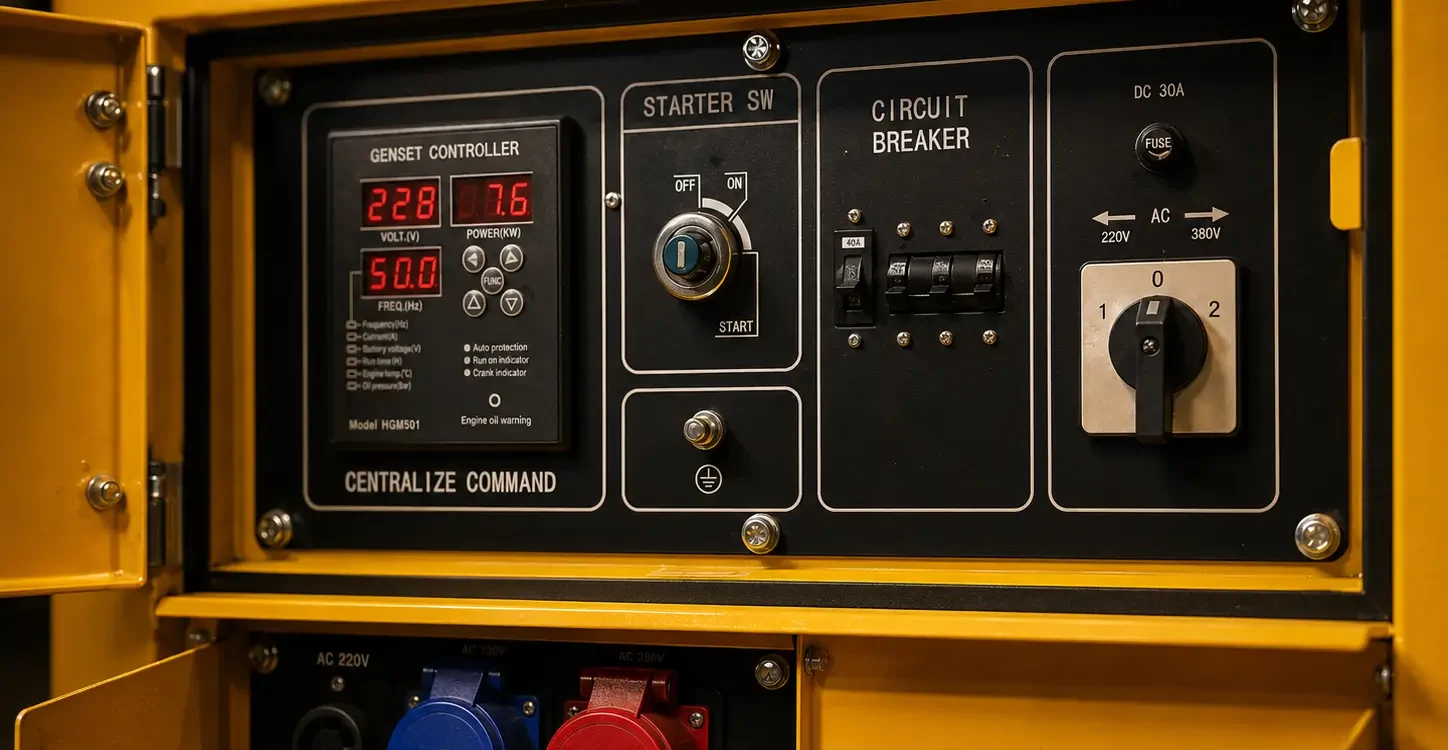
One of the most common points of confusion when purchasing a generator is understanding the difference between standby power and prime power ratings. Both figures appear on every Lambordini generator specification sheet — but they mean very different things, and choosing the wrong one for your application can lead to an underpowered or overworked machine.
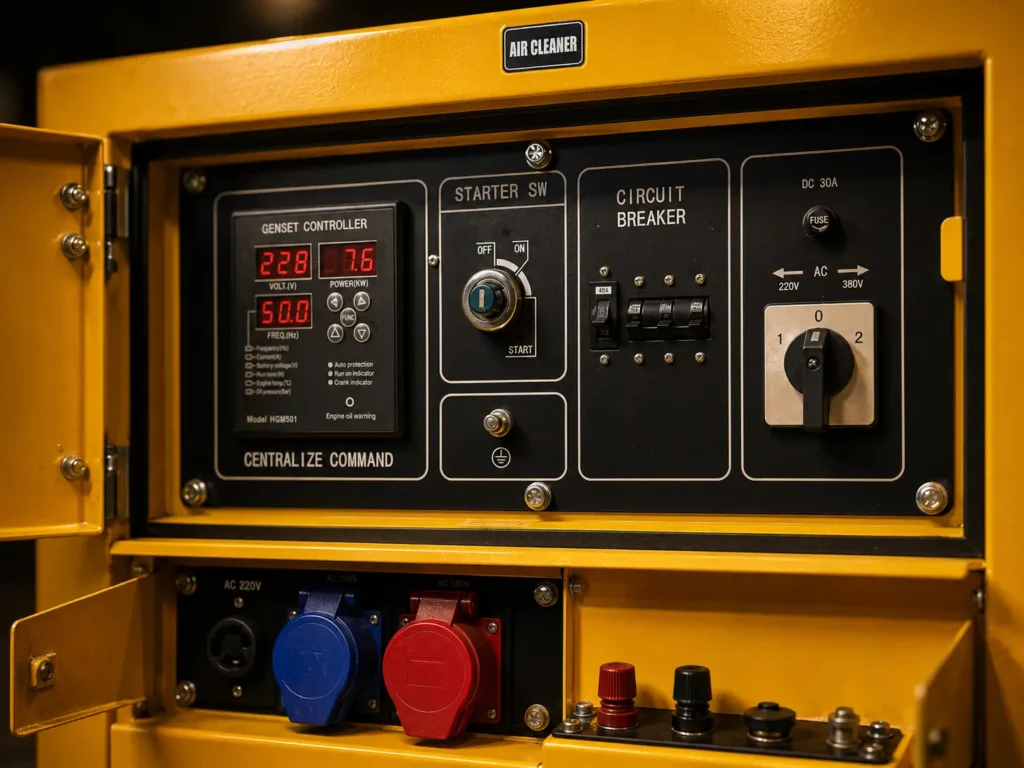
Here is a clear breakdown of what each rating means and how to use them correctly.
What Is kVA?
kVA stands for kilovolt-ampere. It is a measure of apparent power — the total power a generator can supply to a load, accounting for both active power (which does real work) and reactive power (which is stored and released by inductive loads like motors and transformers).
The relationship between kVA and kW depends on the power factor — typically 0.8 for three-phase generators. So a 25 kVA generator at a 0.8 power factor delivers 20 kW of actual working power.
Standby Power Rating
Standby power — sometimes labelled as “Maximum Power” or “Standby Rating” — is the maximum output a generator can deliver for short periods during a utility power failure.
Key characteristics of standby power:
• Designed for emergency backup use only — not for continuous operation.
• Assumes the generator will run for a limited number of hours per year (typically no more than 200 hours).
• No overload capability — the generator should never be run above this rating.
• Used when a utility grid is the primary power source and the generator provides backup.
Example: The Lambordini FT28000SE has a standby rating of 25.0 kVA. This is the maximum it can produce during a power outage, for emergency purposes.
Prime Power Rating
Prime power — sometimes labelled as “Rated Power” or “Continuous Power” — is the maximum output a generator can sustain indefinitely, with a variable load.
Key characteristics of prime power:
• Suitable for continuous operation where there is no utility grid connection.
• Allows up to a 10 percent overload for short periods (typically 1 hour in every 12).
• Used in off-grid locations, construction sites, mining operations, or any application where the generator is the primary power source.
• The figure you should use when sizing a generator for regular daily use.
Example: The Lambordini FT28000SE has a prime rating of 22.5 kVA. This is the figure to use when sizing this unit for continuous duty.
Which Rating Should You Use to Size a Generator?
The answer depends on how you plan to use the generator:
• Backup / emergency power only → use the standby rating as your reference, but size for the load you expect to run during an outage.
• Primary / off-grid power source → always size based on the prime power rating, and aim to run the generator at 70 to 80 percent of prime load for best fuel efficiency and longevity.
• Never size a generator based on standby rating for continuous use — it will be overworked and will fail prematurely.
A Practical Sizing Example
You need to power a commercial facility with a total connected load of 18 kW. The utility grid is unreliable and the generator will run as the primary power source for 8 to 10 hours per day.
At a power factor of 0.8, you need: 18 kW ÷ 0.8 = 22.5 kVA of prime-rated capacity.
The Lambordini FT28000SE, with a prime rating of 22.5 kVA, is sized precisely for this application. Running at 80 percent of prime load ensures optimal fuel efficiency and long engine life.
Summary
Standby rating = emergency backup. Prime rating = your everyday working figure. When in doubt, always specify prime power for the actual load you intend to run — and allow a 20 to 25 percent headroom above your calculated requirement.